

fbpx

Understanding Ankle Pain

null

Your Ankle

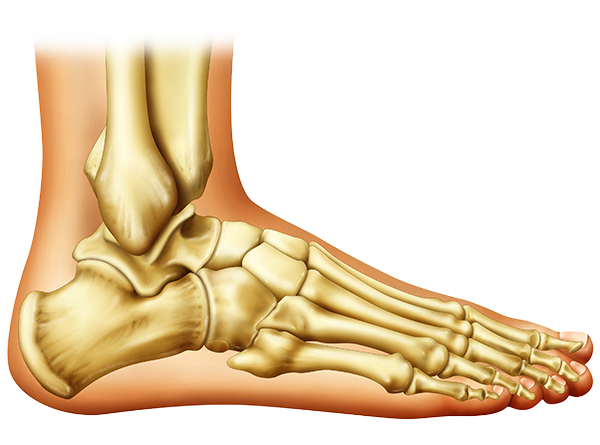
Your ankle is made up of a variety of bones, ligaments, tendons and cartilage that connect at the junction of your leg and foot. The joint works like a hinge and is responsible for moving your foot up and down.

The tibia (shinbone), talus and fibula (smaller bone in the lower leg) are the bones that construct the ankle joint. Your ligaments border these bones on either side, holding them together to provide stability. Meanwhile the tendons connect the muscles to the bone and are responsible for the ankle and toe movements.

Covering your bones is a smooth substance called cartilage, which acts as a cushion to reduce the friction between your bones as they move. If your cartilage wears down, arthritis can develop and cause loss of motion and pain.
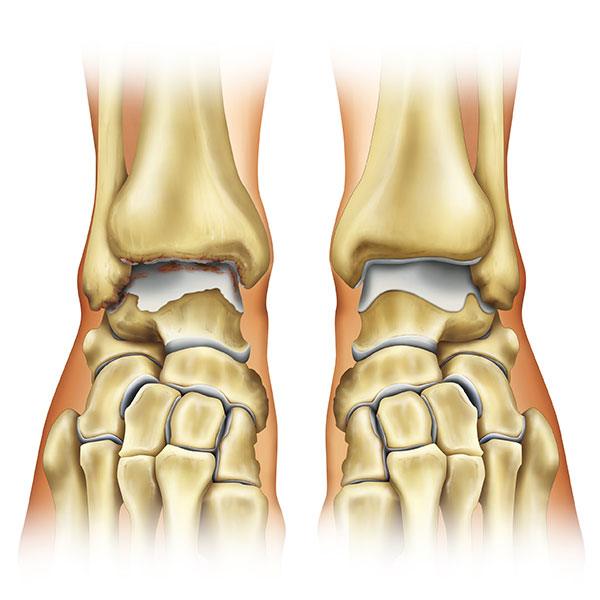
Nearly half of individuals over the age of 60 have foot or ankle arthritis.1

Ankle Arthritis

Nearly half of individuals over the age of 60 have foot or ankle arthritis that may not cause symptoms.1 However, for those suffering from ankle arthritis pain the most reported causes are:2

Rheumatoid Arthritis

It is an autoimmune disease that attacks multiple joints and typically starts in the hands and feet. The lining surrounding your joints swells and becomes inflamed, destroying the cartilage, ligaments and other tissues around it. This could potentially lead to joint deformities and stress fractures.

Post-traumatic Arthritis

The most common cause of ankle arthritis and is typically caused by physical injuries, such as fractures or dislocations, or associated with a traumatic event, such as a car accident, sports injury or fall.3 According to the American Academy of Orthopaedic Surgeons, people are seven times more likely to develop arthritis in a joint that has been previously injured.4

Osteoarthritis

It is the wearing down of the cartilage in the joint. The cartilage can become frayed and rough and the protective space between the bones is reduced, causing bone-on-bone rubbing and osteophytes. Age is the most common reason for osteoarthritis, but family history and crystalline diseases, such as gout5 or pseudogout, can also play a role in its development.6

Treatment Options

At first, your doctor may recommend one of several non-surgical treatment options, such as:

  • Over-the-counter medications
  • Physical therapy
  • Orthotic shoes
  • Supportive braces

Expertise from a foot and ankle specialist can help determine your best treatment option. If non-surgical treatments do not provide relief, your doctor may recommend surgery. Common surgical options include ankle fusion and total ankle replacement.

Treatment Options

At first, your doctor may recommend one of several non-surgical treatment options, such as:

  • Over-the-counter medications
  • Physical therapy
  • Orthotic shoes
  • Supportive braces

Expertise from a foot and ankle specialist can help determine your best treatment option. If non-surgical treatments do not provide relief, your doctor may recommend surgery. Common surgical options include ankle fusion and total ankle replacement.

  1. Arthritis of the foot and ankle. Retrieved from: https://www.aofas.org/footcaremd/conditions/ailments-of-the-ankle/Pages/ Arthritis.aspx.
  2. Valderrabano, V., Horisberger, M., Russell, I., Dougall, H., & Hintermann, B. (2009). Etiology of Ankle Osteoarthritis. Clinical Orthopaedics and Related Research, 467(7), 1800–1806. https://doi.org/10.1007/s11999-008-0543-6
  3. Mann JA, Mann RA, Horton E (2011) Start ankle: long-term results. Foot Ankle Int 32:S473-S484.
  4. www.orthoinfo.aaos.org/topic.cfm?topic=a00209
  5. Gout may be your second arhritis. Retrieved from: https://www.arthritis.org/aboutarthritis/types/gout/articles/gout-as-second-arthritis.php.
  6. Arthritis and pseudogout. Retrieved from: https://www.webmd.com/osteoarthritis/arthritis-pseudogout#1.