
fbpx

Ankle Replacement

null

Surgical Options

Ankle Replacement

Ankle replacement has been around for more than 30 years, however it didn’t gain popularity until the 1990s when technology and instrumentation became more sophisticated.1

Today, an increasing number of patients in the U.S. undergo this surgery intended to regain motion and reduce pain.2 

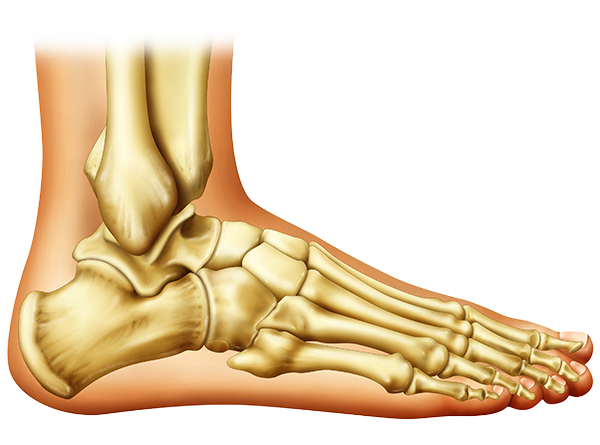
Unlike an ankle fusion, an ankle replacement removes the diseased portions of the bone and cartilage, and replaces them with metal and high medical quality plastic components. This allows patients to retain more of their natural anatomy and movement while reducing pain.3-9
Ankle Fusion

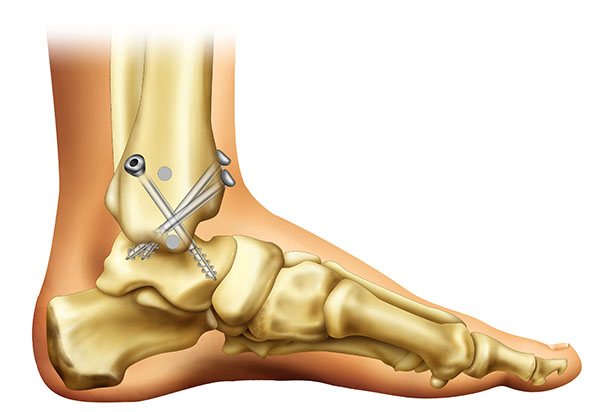
In ankle fusion, the ankle bones are fused together, eliminating the motion in the joint.4

Pins, plates, screws and rods hold the bones together until they are healed and become one. The goal of this procedure is to reduce pain from the arthritic joint.

This procedure blocks movement at the ankle joint, specifically the up and down motion of the foot. For example, this may make it difficult to wear high heels after surgery. It can also potentially cause patients to walk with a limp or develop arthritis in the surrounding joint areas.10

While fusions are a successful treatment option for ankle arthritis, advancements in ankle replacement surgery have given patients a more functional treatment option.

What Happens in Ankle Replacement Surgery?

Patients will undergo anesthesia or a nerve block and can expect to be in the operating room between two and three hours.

The surgeon will make an incision either at the front or the side of the ankle, depending on the type of implant. The diseased portions of the bones and cartilage are removed and the metal and plastic implant components are placed accordingly. Once the implant is inserted, the wound is sealed and a splint or cast is applied.

Post-Surgery Procedure

A majority of patients can return to partial weight-bearing activities three weeks after surgery, and all patients by six weeks.

Activities like golf may be resumed between three and four months after surgery and full recovery may take as long as six months with continuous improvement for the next two years. Your doctor will decide if physical therapy is right for you and what restrictions may apply.

Every patient recovery experience is unique, so be sure to talk with your doctor about your progress. The information above is based on the experiences of Vantage Ankle design team surgeons.

Post-Surgery Procedure

Die meisten Patienten können bereits drei Wochen nach der Operation Aktivitäten mit teilweiser Belastung vornehmen Spätestens nach sechs Wochen können dies auch die restlichen Patienten.

Activities like golf may be resumed between three and four months after surgery and full recovery may take as long as six months with continuous improvement for the next two years. Your doctor will decide if physical therapy is right for you and what restrictions may apply.

Every patient recovery experience is unique, so be sure to talk with your doctor about your progress. The information above is based on the experiences of Vantage Ankle design team surgeons.

  1. The next big thing: opportunities and innovations in total ankle arthroplasty. 2011 Jan 1. Retrieved from: https://www.mddionline.com/article/next-big-thingopportunities-and-innovations-total-ankle-arthroplasty.
  2. Total ankle arthroplasty. Retrieved from: https://www.aofas.org/footcaremd/treatments/Pages/Total-Ankle-Arthroplasty.aspx.
  3. Mann JA, Mann RA, Horton E. STAR Ankle: long-term results. Foot Ankle Int. 2011;32:S473-484
  4. Arthritis of the foot and ankle. Retrieved from: https://www.orthoinfo.aaos.org/topic.cfm?topic=a00209.
  5. Gould JS, Alvine FG, Mann RA, Sanders RW, Walling AK. Total ankle replacement: a surgical discussion. Part II. The clinical and surgical experience. AM J Orthop.2000;29(9):675-682.
  6. Pyevich MT, Saltzman CL, Callaghan JJ, Alvine FG. Total ankle arthroplasty: a unique design. Two to twelve-year follow-up. J Bone Joint Am. 1998; 80 (10):1410-20.
  7. Saltzman CL et al. Prospective controlled trial of STAR total ankle replacement versus ankle fusion: initial results. Foot & Ankle International. 2009; 30(7).
  8. San Giovanni TP, Keblish DJ, Thomas WH, Wilson MG. Eight-year results of a minimally constrained total ankle arthroplasty. Foot & Ankle International. 2006; 27(9).
  9. Nunley JA, Caputo AM, Easley ME, Cook C. Intermediate to long-term outcomes of the STAR total ankle replacement: the patient perspective. J Bone Joint Surg Am. 2012; 94 (1):43-48.
  10. Ankle arthrodesis. Retrieved from: https://www.aofas.org/footcaremd/treatments/Pages/Ankle-Arthrodesis.aspx